Eset Kotibaruly was one of the well-known Kazakh batyrs of the 19th century, a biy, public figure and leader of the national liberation movement against the colonial policy of the Russian Empire. He was born in 1803 in the area of present-day Shalkar District of Aktobe Region, near Akshi, approximately 7–10 kilometres from Lake Shalkar. He died in 1889.
Eset Batyr was an authoritative figure of the Kabak clan of the Lesser Zhuz. In historical memory, he is remembered not only as a brave warrior, but also as a biy who was able to unite people and make important decisions during a difficult historical period.
In 1838, Eset Kotibaruly took part in uprisings together with Zholaman Tlenshiuly and is associated with attacks on the Ilek fortification. In the 1840s and 1850s, he became one of the leaders of resistance among Kazakhs living near the western coast of the Aral Sea, the Greater and Lesser Barsuki sands, the Mugodzhar Mountains and along the Emba, Sagyz, Irgiz, Ilek, Oyil and Kiyil rivers.
Eset Batyr’s activity was not limited to resistance against the colonial policy of the Russian Empire. His name is also connected with struggles against the influence of the Kokand and Khiva khanates. For this reason, Eset Kotibaruly occupies an important place not only in the history of Western Kazakhstan, but also in the broader history of Kazakh national liberation movements.
Historical sources describe Eset Kotibaruly as a brave batyr, an authoritative biy and a person capable of uniting people during a difficult political period. His life reflects the resistance of Kazakh society to colonial pressure and the struggle for land and freedom.
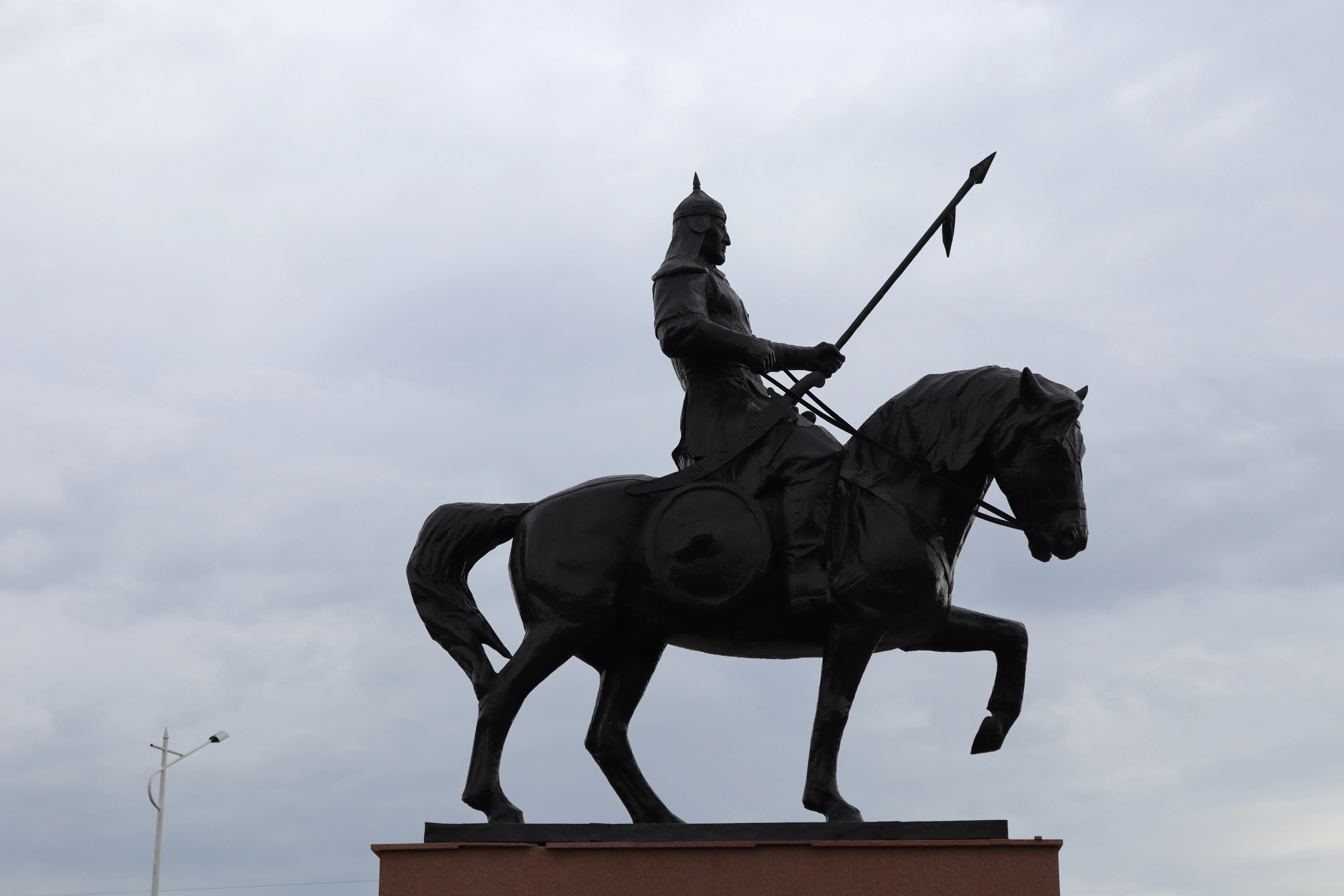
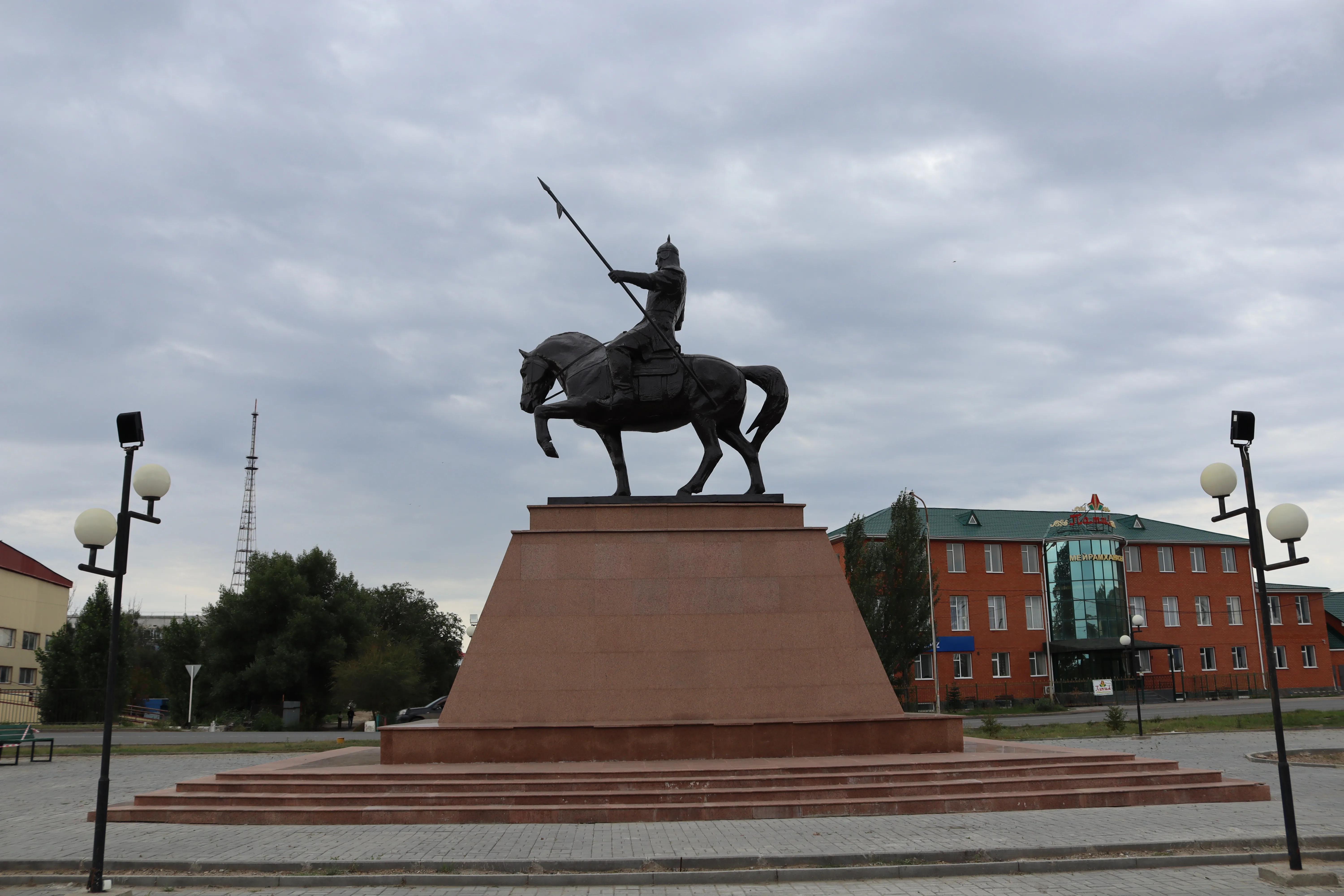
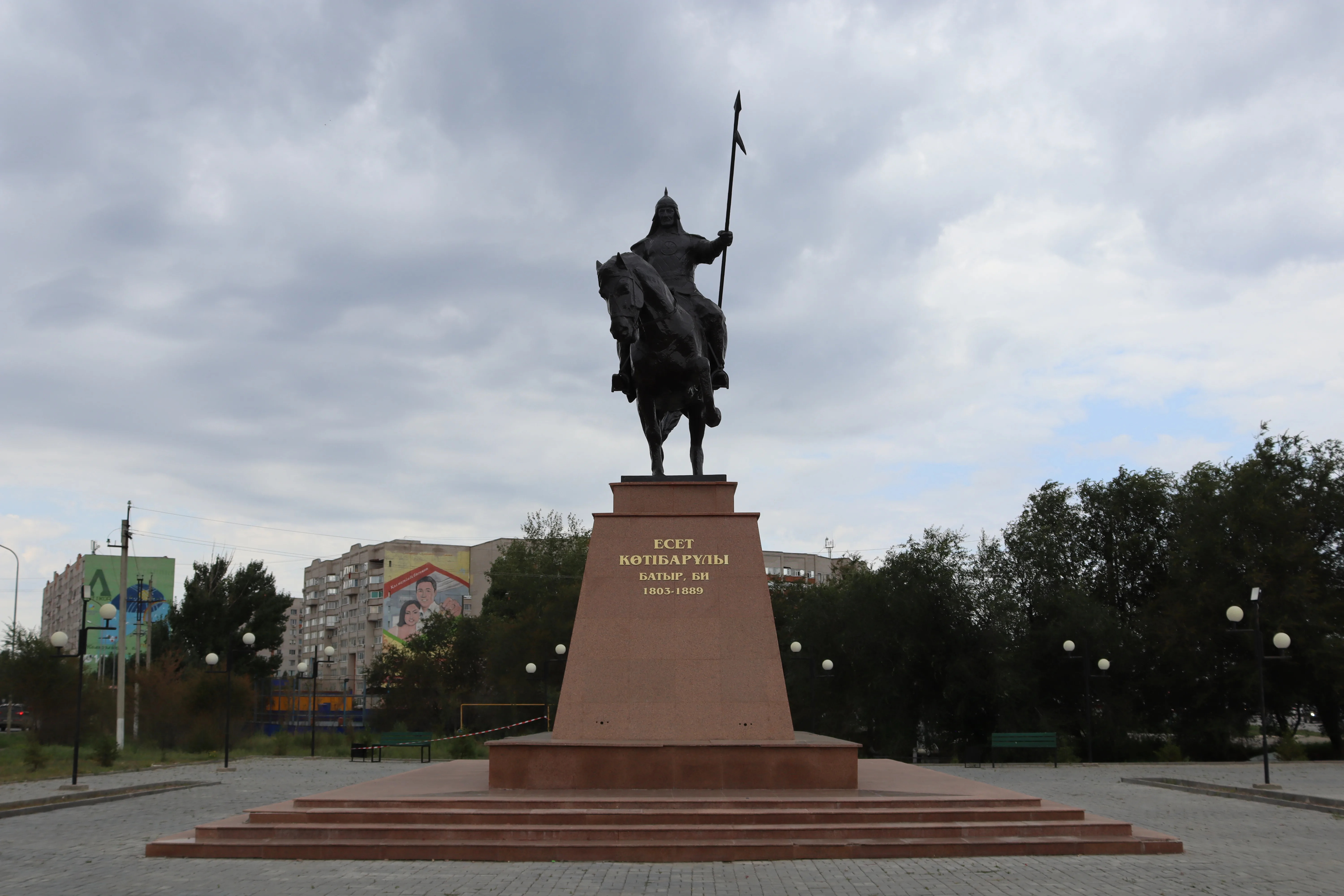
Description of the Monument: The monument to Eset Kotibaruly is located in Aktobe, at the intersection of D. Kunaev Street and K. Nokin Avenue. The monument presents the historical figure through a powerful equestrian composition.
The monument consists of a sculpture of Eset Kotibaruly on horseback, holding a spear in his left hand, and a pedestal. The equestrian image of the batyr artistically conveys the ideas of freedom, courage and the tradition of defending one’s native land, which are characteristic of steppe military culture.
The pedestal is made of cement and faced with granite. Its length is 8.8 metres, its width is 4.6 metres, and its height is 3.55 metres. The four-tier stylobate is 15 metres long, 10.8 metres wide and 0.5 metres high. The sculpture is cast in copper and is 5.45 metres high. The total height of the monument is 9.5 metres.
The author of the monument is the well-known Aktobe sculptor Zhenis Zhubankossov. The monument was erected with the funds of the Eset Batyr Kotibaruly Public Foundation and with the support of concerned citizens.
The monument to Eset Kotibaruly was solemnly opened in Aktobe in 2023.
-
Intersection of D. Kunaev and K. Nokin streets